FREE TOOL
Will your bike rental business be profitable?
In 3 minutes, estimate your revenue, your break-even point and how long it will take to pay back your fleet. Free, no sign-up.
Everything is pre-filled with a typical fleet of 15 bikes: change whatever applies to you and the result updates live.
1. Your project
2. Your fleet
3. Your business
4. Costs and financing
Amounts exclude VAT. Software at €0: BikUp Pro is free for 6 months during the beta.
Our tips for your project
Manage this fleet with BikUp Pro
Not ready yet? Start by renting out your bikes on the BikUp marketplace, with no subscription.Indicative estimate, excluding taxes and VAT. This calculator is no substitute for advice from an accountant.
How to calculate the profitability of a bike rental business
The profitability of a bike rental business comes down to four questions: how many days each bike is rented, at what price, with what costs, and with what initial investment. The calculator takes them in that order and shows you at each step what moves the result.
- 01Days rented
Opening days multiplied by the share of the fleet rented each day.
- 02Revenue
Days rented multiplied by the rate, half-days and extras included.
- 03Costs
Rent, insurance, maintenance, wages, software, marketing and payment fees.
- 04Profit
What remains after the wear on the bikes and the loan interest.
An example: how much does an electric city bike earn?
With the calculator’s default values, an electric city bike is rented 60 days a year: 60 high-season days at 60% utilisation, then 120 days at 20%. At €30 a day, with 30% of rentals being half-days charged at 65% of the rate and €4 of extras per rental, it earns around €1,850 a year for a purchase cost of €2,000. The tool runs this calculation for each category, then deducts the costs.
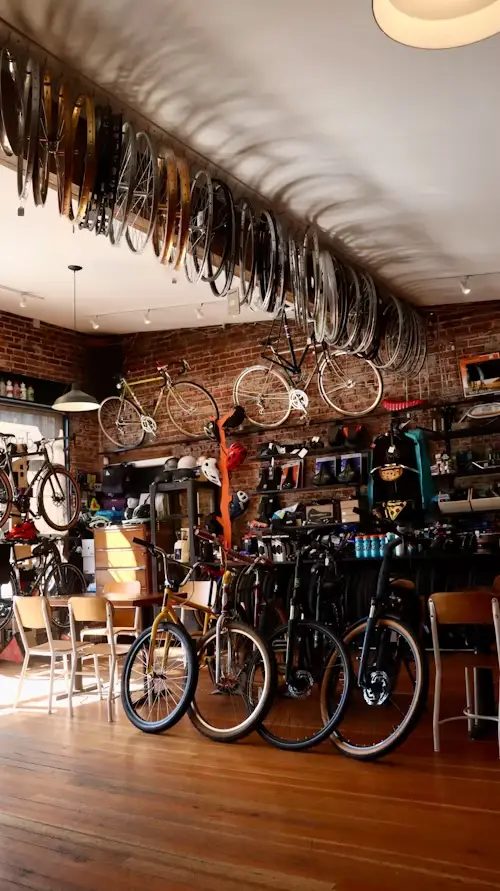
- 15bikes
Including 11 e-bikes: city, mountain and cargo.
- 34 600 €purchase cost
Price of the bikes, excluding locks, helmets and tools.
- 30 987 €annual revenue
Per year, from April to October.
- 29,5 %break-even utilisation
Against a planned average utilisation of 33.3%.
Example calculated with the default values: adapt it to your project.
How to read your result
The break-even point is the average utilisation rate at which your business covers all its costs, depreciation and interest included. The wider the gap with your planned utilisation, the better your project can withstand a poor season.
The payback period compares your total investment with the surplus generated each year before loan repayments. If it exceeds the lifespan of your bikes, you will have to renew the fleet before you have paid it back.
Profit before tax is what remains once you have paid your costs, the wear on your bikes (depreciation) and the loan interest. If it is negative, the calculator tells you the utilisation you need to reach to get back to break-even.
The three ratios to watch
Utilisation outside high season. The busy weeks of summer often fill up on their own. It is the other months that make the difference between a fragile project and a solid one: test the cautious scenario before you commit.
The weight of rent. Well-located premises bring in customers, but you pay for them all year round. The calculator alerts you when rent absorbs more than 30% of revenue.
Revenue per euro invested. Not all bike categories are equal. The tip shown below your results tells you which one earns the most for every €100 spent on bikes, at your own rates.
Five levers to improve your profitability
Once you have entered your project, change one setting at a time and watch the result move. The “What weighs most on your profit” chart shows you where to start.
- 01Extend the season
A few more weeks open in spring and autumn spread your fixed costs more effectively.
- 02Fill the quiet days
Multi-day discounts, partnerships with accommodation providers, groups and long-term rental.
- 03Sell extras
Helmets, child seats, panniers, delivery: a few more euros on every rental.
- 04Choose the right categories
Strengthen the ones that earn the most per euro invested, at your own rates.
- 05Save management time
Online booking and payment, pre-authorised deposits: more rentals without hiring.
To explore these topics further, read our guides on seasonality in bike rental and on the profitability of rental e-bikes.
Common mistakes at launch
Reasoning on the high season alone. A fleet sized for the fifteen busiest days sits idle the rest of the year. Better to miss a few rentals in August than to finance bikes that lie dormant for ten months.
Forgetting maintenance, losses and theft. Wearing parts, batteries, breakages, bikes not returned: these items are proportional to the size of the fleet and weigh on every year.
Leaving your own pay out of the calculation. A positive result without any pay for the owner is not yet an income. Enter what you plan to pay yourself to see whether the project holds up.
Underestimating management time. Phone bookings, paper contracts, deposits by cheque: this time does not appear on any cost line, but it limits the number of rentals you can handle. This is where bike rental software saves you hours.
Going further
The calculator gives a rough estimate. To build your project, draw on our guides too: the bike rental market in Europe, cycle tourism customers and visibility for an independent rental shop. And when you choose your tools, take a look at the BikUp Pro beta programme: six months free.
Frequently asked questions
What utilisation rate should a bike rental business aim for?
There is no universal figure: utilisation depends on your area, your season and your customers. The right benchmark is your break-even point. Aim for a planned utilisation well above it, looking at the high season and the rest of the year separately, and check your assumptions against rental businesses already established in your area.
How much does a fleet of rental e-bikes cost?
The calculator starts from rough figures: around €2,000 for an electric city bike, €3,500 for an electric mountain bike and €5,000 for an electric cargo bike. These amounts should be confirmed with a supplier. Add the investments other than bikes: locks, helmets, tools and fitting out the premises.
Should you buy or lease your bikes when starting out?
Buying requires own funds or a loan, but the bikes belong to you and keep a resale value. Long-term hire or leasing reduces the initial outlay in exchange for fixed payments, to be included in your costs. Many rental businesses start with a small fleet, sometimes second-hand, then expand it once demand is confirmed.
What insurance does a bike rental business need?
There are two types of cover to look at with your insurer: professional liability, for damage caused to third parties, and cover for the fleet against theft and breakage. Check the conditions required (locks, locked premises) and what remains payable by the customer, often covered by a deposit.
How is the break-even point calculated?
As revenue is proportional to utilisation, the calculator looks for the average utilisation that exactly covers fixed costs, depreciation and loan interest, once payment fees have been deducted. Below it, the business loses money; above it, it makes money.
Does the calculator take taxes and VAT into account?
No. All amounts exclude VAT, and the result is given before tax on profits and before the owner’s social security contributions. It is a rough estimate for making decisions and comparing scenarios, not a financial forecast: have your project checked by an accountant.
How can you improve profitability out of season?
Several options work together: long-term rental to residents or companies, partnerships with accommodation providers and tourist offices, groups and school parties, and multi-day discounts that lengthen the average rental. The calculator’s cautious scenario shows what you gain by filling these quiet months.