E-Bike Rental Market: Why Electric Bikes Drive Bike Hire and How to Make Them Profitable
E-bikes now outsell standard bikes in Germany. What it means for an e-bike rental business: demand, daily rates, investment, batteries and insurance.
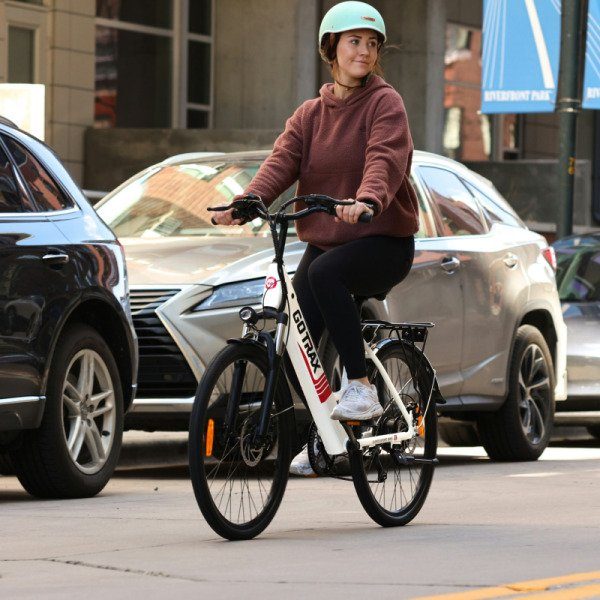
E-bikes are now the core of the European bike market: in Germany they made up 52.7% of bikes sold in 2025, and rental operators charge a clear premium for them. For a rental business, that premium only turns into profit if you control three things: the purchase price, the number of rental days per bike and the life of each battery. This guide gives you the latest market figures and a practical method for each.
E-bikes now lead the European bike market
The industry figures all point the same way. According to CONEBI, the European cycling industry association, 5.1 million e-bikes were sold in Europe in 2023, against 11.7 million standard bikes. That was slightly down on 2022 (5.5 million), but still more than 50% above pre-pandemic e-bike sales. CONEBI's July 2025 report describes 2024 as a stable year, with the e-bike keeping a significant share of the market.
National data for 2025 show how far the shift has gone in the most mature markets:
- Germany: about 2 million e-bikes sold out of roughly 3.8 million bikes, a 52.7% share, with 17.2 million e-bikes now on the road (ZIV, March 2026).
- Germany: an average e-bike selling price of €2,550 in 2025, down 3.8%, against €500 for a standard bike (ZIV).
- France: 507,000 e-bikes sold in 2025, down 16% after the end of national purchase grants, at an average price of around €2,000 against €638 for a standard bike; e-bikes still account for more than half of the market by value (Union Sport & Cycle, April 2026).
Two lessons for a rental business. First, sales are normalising after the post-Covid boom, so this is a mature product rather than a fad. Second, a growing share of your customers already ride an e-bike at home and expect one on holiday.
Figures published by ZIV, the German cycling industry association.
- 52.7%E-bike share of bikes sold
Out of roughly 3.8 million bikes sold in 2025.
- 2 millionE-bikes sold
About 2 million units in 2025.
- €2,550Average e-bike price
Down 3.8% on 2024, against €500 for a standard bike.
- 17.2 millionE-bikes on the road
The German e-bike fleet in 2025.
What the market estimates say about e-bike rental
There is no official statistic for the e-bike rental market. The available numbers are estimates from research firms, built on different scopes, and they often include shared bike schemes. Treat them as orders of magnitude:
- Market Research Future values the global e-bike rental market at $6.02 billion in 2024 and projects $25.3 billion by 2035, an average growth of 13.94% a year.
- Grand View Research puts the European bike and scooter rental market at $2.3 billion in 2025 and projects $5.77 billion by 2033 (11.4% a year), with electric models as the fastest growing segment.
The gap between these figures says more about methodology than about the market. The useful takeaway is the direction: every estimate expects electric rentals to grow faster than standard ones. For the wider picture, read our overview of the bike rental market in Europe.
E-bikes rent at a premium
Public price lists show that operators charge noticeably more for an e-bike than for a standard bike. Two examples from Malta, checked in October 2026:
- The Cyclist, San Ġwann: mountain bikes from €15 a day, e-bikes from €25, about 67% more.
- Gozo Escape, Gozo: mountain bike €25 a day, e-bike €40 a day for one or two days, 60% more, falling to €30 a day from four days.
The premium reflects the higher purchase price, the battery and the extra maintenance, but also what the customer gets: longer distances, hills without effort and a bike that suits less sporty riders. Our guide to bike rental pricing details how to build multi-day rates around it.
Investment and payback: the rental days that count
A simple calculation shows why utilisation matters more than the daily rate. Take the average German e-bike price of €2,550. At €40 a day, the purchase price alone takes about 64 rental days to recover; at €25 a day, about 102 days. That is before any running cost, and fleet models built for rental can cost more than the average consumer bike.
To estimate the payback of your own fleet, work bike by bike:
- Purchase price, minus any resale value you can expect at the end of its rental life.
- Realistic rental days per season, based on your past bookings rather than on peak weeks.
- Average revenue per rental day, after multi-day discounts.
- Running costs: servicing, tyres and brake pads, a replacement battery, insurance, card fees, storage and charging.
- Downtime: days lost to repairs or flat batteries in high season.
The levers are therefore clear: fill more days (online booking, multi-day offers, low season customers), avoid idle bikes in the wrong model or size, and keep each bike rentable for as many seasons as possible.
Batteries: the asset inside the asset
The battery is the most expensive wear part of an e-bike. Bosch points out that every lithium-ion battery ages, even when not in use, and that its capacity falls over time. Its battery guide lists what shortens or extends battery life:
- Avoid storage above 30 °C and parking in direct sunlight; keep bikes in the shade or a cool place.
- For longer storage, such as in the low season, keep batteries between 0 and 20 °C at about 30 to 60% charge.
- Do not leave batteries fully charged or fully empty for long periods.
- Charge in a dry room fitted with a smoke detector.
For a fleet, this means a charging and storage routine, a log of each battery (bike, date of purchase, range complaints) and, ideally, spare batteries so that a flat battery never blocks a booking. EU law is also moving: under the Batteries Regulation (EU) 2023/1542, which entered into force on 17 August 2023, batteries for light means of transport such as e-bikes must be replaceable by an independent professional three and a half years later, that is from February 2027. That should make it easier to keep a bike in service when its battery wears out.
- 01Keep it cool
No storage above 30 °C, no parking in direct sunlight.
- 02Store half charged
For the low season, 0 to 20 °C at about 30 to 60% charge.
- 03Avoid the extremes
Never leave a battery fully charged or empty for long.
- 04Charge safely
A dry room fitted with a smoke detector.
- 05Log every battery
Bike, purchase date and range complaints.
- 06Keep spares
A flat battery should never block a booking.
Rules and insurance for rental e-bikes
In the EU, an e-bike whose motor has a maximum continuous rated power of 250 W and whose assistance cuts off when the rider stops pedalling and before 25 km/h is excluded from the type-approval rules for motor vehicles (Regulation (EU) No 168/2013). More powerful or faster models, such as speed pedelecs, fall under those rules, with stricter requirements that vary by country.
On insurance, the revised Motor Insurance Directive, agreed in June 2021 and adopted as Directive (EU) 2021/2118, only covers vehicles propelled exclusively by mechanical power, which leaves standard e-bikes outside compulsory motor insurance. That does not mean a rental business needs no cover. Ask your insurer about:
- Third-party liability for your activity and for customers riding your bikes.
- Theft and damage to the fleet, including batteries.
- Fire risk in the charging and storage area.
- The conditions of your rental contract and deposit, which should match your cover.
National rules on helmets, minimum age or road use differ: check them in each country where you operate. For Malta, see our guide to e-bike rental in Malta.
Running an e-bike fleet day to day
An electric fleet needs tighter organisation than a standard one, because each bike is worth more and depends on its battery. The essentials:
- A real-time planning of every bike, so that no booking lands on a bike in repair or with a flat battery.
- Online booking with payment, so that high-season days are sold in advance.
- A deposit sized to the value of the bike, ideally pre-authorised on a card rather than taken in cash.
- Automatic multi-day rates, which turn one-day rentals into longer ones.
- Paid extras such as child seats, panniers or delivery to the accommodation.
- A check-out and check-in routine: battery charge, brakes, tyres, damage photos.
These are exactly the points that BikUp Pro is designed around: fleet planning, online booking and payment, pre-authorised deposits, automatic degressive rates and accessories and services.
Frequently asked questions
Is an e-bike rental business profitable?
It can be, but profit depends mainly on utilisation. At the average German e-bike price of €2,550 in 2025, recovering the purchase price alone takes about 64 rental days at €40 a day, or about 102 days at €25, before running costs.
How much more can I charge for an e-bike than for a standard bike?
Published price lists in Malta in October 2026 show e-bikes rented 60 to 67% above mountain bikes at the same operator, for example €25 against €15, or €40 against €25 a day.
What share of bikes sold in Europe are e-bikes?
CONEBI counted 5.1 million e-bikes and 11.7 million standard bikes sold in Europe in 2023. In Germany, e-bikes made up 52.7% of bikes sold in 2025 (ZIV).
Do rental e-bikes need motor insurance?
Standard pedelecs (250 W, assistance up to 25 km/h) are outside compulsory EU motor insurance, but a rental business still needs liability, theft and damage cover. Check with your insurer and the national rules.
How can I make e-bike batteries last longer?
Bosch recommends avoiding heat above 30 °C and direct sunlight, storing batteries between 0 and 20 °C at about 30 to 60% charge, and not leaving them fully charged or empty for long periods.
E-bikes have become the heart of the bike market, and renters expect them. The premium they command is real, but profitability comes from filling rental days, protecting batteries and pricing multi-day rentals well. BikUp Pro is being built with independent rental owners to handle exactly that: fleet planning, online booking and payment, pre-authorised deposits and automatic degressive rates. Join the beta programme to get six months free, or ask to be called back.
Join the BikUp Pro betaAlso worth reading
A free bike rental profitability calculator for rental shops
Free bike rental profitability calculator: revenue, break-even occupancy and payback period in about three minutes, with no sign-up.
Read the article →
Bike Rental Pricing in Malta: Daily Rates, Multi-Day Discounts, Deposits and VAT
Bike rental pricing in Malta and Gozo in 2026: daily rates, multi-day discounts, seasons, deposits and VAT, plus a method to set yours.
Read the article →
Running a Gozo Bike Rental Business: Ferry, Seasons, Guests and Delivery
How to run a Gozo bike rental business: the Gozo Channel ferry, summer peaks, who rents, delivery to guests and accommodation partnerships.
Read the article →